Saturday, January 29, 2022

ONE-SENTENCE LESSON #12

"Greatness is the perfect mixture of technique and artistry." 


Related thoughts:

  • Guarantee purity!
  • Secure your technique for the purpose of flawless expression. 
  • Faulty technique will not contribute to great artistry.
  • Artistry requires technical control.
  • The purpose of great technique is compelling drama.
  • When artistry rules, mechanics can obey. 
  • When mechanics obey, artistry can emerge.
  • Passionate drama is well-organized. 
  • Emotions must be skillfully controlled.
  • Accuracy needs artistry. Artistry needs accuracy.


Friday, January 28, 2022

Only 1 Lesson!

Sometimes it only takes one lesson to make a lasting impact. 

In 1974 John Ware played a two-octave scale up and down for me. That was all I needed to hear. But it was the way he did it, starting pianissimo with a crescendo to fortissimo, and returning to pianissimo. Or it can be done with the reverse dynamics with a variety of articulations. Really quiet and really loud, without forcing or pinching. Always with a fabulous tone! 

The rest of that lesson was inspirational for sure, but the details have been forgotten. What I remember today however, is the ease and finesse with which he released a superior sound!

Lesson 2 was watching him play first on the Planets in the Philharmonic. It was the same thing: power and finesse all in one player! Articulations exploded out the bell. We heard exciting dominating trumpet playing from a rather small, mild-mannered gentleman. 

Of course, who cannot be amazed at the beauty of his Posthorn Solo in Mahler 3! His gorgeous playing still rings in my mind every time that excerpt comes up. He said very little that day, but his playing said everything I needed to hear!  


Wednesday, January 19, 2022

Overcoming the Nerve Monster

Great news! The NERVE MONSTER is not invincible! The dreaded adversary can be overcome or rendered ineffective and no longer a dangerous opponent.  How great would that be!

To be able to resist the onslaught of nerves requires a strengthening of your message. There should be no enslavement to crippling bouts of fright every time you take the stage! 

For this to happen, something more powerful than fear must take control. When it does, a successful performance or audition could actually happen. How great would that be!  

A public speaker who was known for his effective speaking before large crowds once admitted that were it not for one thing, he would be a nervous wreck every time he approached the podium. Nervousness was an admitted obstacle until he remembered why he was there!  

So, what turns hesitancy into confidence, fear into boldness? Answer: a total focus on your message! 

When there's much to share, there's no room for self-consciousness. An effective performer concentrates on his music, not on himself. Confidence comes from a sustained passion to deliver a great product. The audience pays to hear the music, not your attempt at an error-free zone. Plunge into the drama and avoid the trauma. How great will that be!


Wednesday, January 12, 2022

ONE-SENTENCE LESSON #13

Stop! Hold on! Slow down and listen! You need to play the Floating Fermata Game!

Imagine a fermata hovering over each line of your music as you play. It dances freely until it stops suddenly over one of your notes that needs your attention. It says, "There, hear that? Now fix it!" 

There's no point in ignoring the floating fermata. It's very sensitive and easily provoked. Any of the following will set it off:

  • Intonation violations
  • Quality malfunctions
  • Legato offenses 
  • Final-note sloppiness
  • Blundered entrances, etc.
The floating fermata is your best teacher!  


Tuesday, December 28, 2021

ONE-SENTENCE LESSON #11

"You are spraying the air with thousands of notes of highly questionable value!" (Mel Broiles)
  • Quality beats quantity.
  • Quality wins jobs.
  • A few minutes of gorgeous playing is better than a whole hour of mediocre blasting. 
  • Big bucks for good notes. Big fines for bad notes. 
  • Ensure that all notes are "usable."


Monday, December 13, 2021

ONE-SENTENCE LESSON #10


As a junior in high school, I was super excited about my first lesson with William Vacchiano. On my new C trumpet, I had prepared #6, molto veloce, from Caffarelli's Etudes de Perfectionnement. The lesson that day was not at all what I expected, but one that I will never forget. 

After a rambunctious charge through my etude, I expected a smile or a nod of approval. Instead, there was no response. He told me to open my Arban book to page 125. It is one of those boring pages of staccato interval studies. Taking his pencil, he deliberately tapped a dreadfully slow tempo, and had me play line 1. I must have missed a third of the notes! Pathetic!

After several of my nervous attempts, he said: "Go home and practice; don't come back until you can play this correctly."

Takeaways: 
  • Humiliation can be the very experience needed to spark improvement.
  • Confronting weaknesses is vital.
  • Appreciate the value of a single lesson.
  • Prepare for performance.
  • Practice accuracy.
  • The control of a single note can be harder than a whole page.  
  • Practice what's not fun.
Note: I did return for my second lesson two weeks later.  His one-sentence lesson had been echoing in my mind for two weeks, and there was no way I was going to get that same lesson again. 

Nailed it!  


Saturday, November 20, 2021

Eyes on the Carrot

What should the serious trumpet student have in common with a rabbit, a mouse, and a fish? 

Answer: HUNGER. The rabbit is drawn to the carrot. The mouse is lured by the cheese, and the fish is hooked by the worm. Consider also the bull, who is enticed into a wild frenzy by the matador's crimson cape! That's the picture, an obsession to be captured by music! 

Great musicians motivate great students.  
 

Saturday, July 31, 2021

ONE-SENTENCE LESSON #9

"Would you mind playing that again, please?"

Thomas Schippers asked that question in the Cincinnati trumpet audition in 1975. It was after one of those long grinding excerpts from Ein Heldenleben. I was a bit puzzled, thinking that I had just nailed it successfully. Later I learned that he was testing for endurance. 

At Tanglewood one summer we heard it again. Roger Voisin was conducting us on Fanfare for the Common Man. Right before we began the performance, he said "all right, boys, we're going to play it twice." (GULP!) Fortunately, we only played it once. He then smiled as if to say, "just testing you, guys." 

Lesson: Once is not enough, even if it's good.


Friday, July 02, 2021

ONE-SENTENCE LESSON #8


"Try not to sound like a student!"  

Nothing wrong with being a student! Who isn't one? 

This advice years ago really helped bring some sanity to practice sessions. Instead of indiscriminate blasting, it brought an awareness that all notes matter. Music is about listening. "Try to sound like a great musician!" 


Monday, June 28, 2021

ONE-SENTENCE LESSON #7

What does a xylophone have to do with trumpet playing? Not a lot, except when taking a closer look at the mallets. 

The "ping" produced by the striking mallet on the toy xylophone is how clear and precise trumpet entrances need to be.

The mallet is the tongue. The note is focused, clear, popping, ringing, and pinging. 
 

Saturday, June 26, 2021

ONE-SENTENCE LESSON #6

Mel Broiles had just demonstrated how one of those opera arias in Arban's The Art of Phrasing should sound. Then it was my turn. (Yes pressure!)

Trying hard to reproduce even some of his elegance and power, I whole-heartedly plowed through one of those famous Verdi arias. I gave it my best but expected a grimace and shrug of disapproval. Instead, he exclaimed, "Spoken like a gentleman!"

Later I wondered if it was sarcasm or genuine praise. Praise was hard to get. I took it as a compliment which has served as motivation lasting for years. How important are the words we speak!


Friday, June 25, 2021

ONE-SENTENCE LESSON #5

"Every piece of music has an important octave in it." (William Vacchiano)

That simple statement should launch a search for all the prominant and voluptuous solo octaves on the planet, starting from Over the Rainbow all the way through Mahler 9! 

Have a nice octave day! 


Thursday, June 24, 2021

ONE-SENTENCE LESSON #4

"You must be able to come "bustin' in" at any time."

Armando Ghitalla said in one sentence what was needed to chase away timidity. A mindset that has no fear. An eagerness to make the grand entrance. A confidence that your first note will be attention-getting. 

You must have a reputation for confident accuracy! As a colleague once said, "It must be automatic." 


Wednesday, June 23, 2021

ONE-SENTENCE LESSON #3


Me to student:  "If you can play this one line of music without a mistake, it's yours!!" 

I felt I was safe, knowing well my student's tendency to miss notes. As soon as he saw the money, however, everything changed. That twenty-dollar bill accomplished more than all of my talking. 

He then proceeded to play the line of music perfectly with nary a miss.  Reluctantly, but happily, I handed him his reward. "WOW! Gas money, he said! Gee, thanks!"

Saturday, June 05, 2021

ONCE-SENTENCE LESSON #2

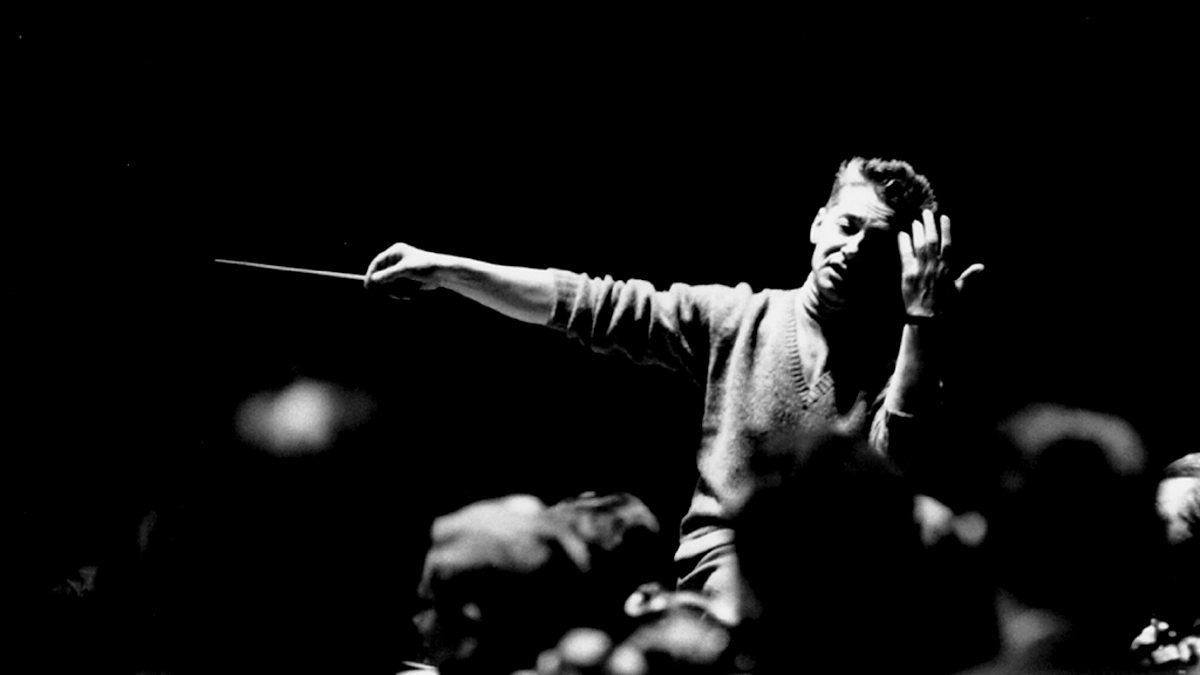
Just as a great conductor can communicate with one gesture, so too the most memorable lessons can often be condensed into a single sentence, or even a facial expression. Effective lessons should be unforgettable and motivating. The art of brevity!

Lesson #2:

"Your passion for music must be greater than your fear of the audience."

Overcome fear with overpowering musicianship. Purpose to enthusiastically communicate, rather than just deliver notes. Prepare to entertain. Drama beats trauma. 


Wednesday, June 02, 2021

ONE-SENTENCE LESSON #1

Just as a great conductor can communicate with one gesture, so too the most memorable lessons can often be condensed into a single sentence. Brief but powerful advice, unforgettable, effective, and motivational. The art of brevity. 

Lesson #1:

"I want you to practice this week as if I were listening to every note!"

Not much else is needed for this command to be useful. You can insert the name of your choice. Then invite your great artist/teacher to listen in. Accountability matters in daily work. 

Benefits: fewer wasted notes, less boredom, better quality, more musical interest, and it's cheaper!

Thursday, November 26, 2020

Items of need

I remember sitting in the audience at a recital by the Juilliard String Quartet. It was our first week as freshmen at the Eastman School of Music. Our class was full of superstar wannabes chomping at the bit. It felt like the opening gate at the Kentucky Derby! My self-imposed assignment that night was to observe and to note the skills needed to be a successful musician.

We all brought strengths to the table but also lots of baggage and abilities needing serious attention. How we were going to deal with our deficiencies in four years was key. 

The Quartet was amazing! Each player displayed enormous energy, showmanship, expression, dynamic contrasts, overall drama, and a sense of mature musicianship. But also, the often ignored skills of impeccable intonation, fantastic rhythm, blending, supporting, leading, and overall control. 

That night I came away with a long list of "items of need." High on my list was: control of each entrance, intonation that doesn't cause wincing, technical wizardry, and accuracy.  Further unpleasant realities: sloppiness, often out of tune, unsteady, unreliable, boring at times, insensitive, and in spite of that, an egotistical attitude! ESM faculty had a lot of work to do!

And so, although perfection is not possible, neither is the lack of diligent effort. The best students practice not what they want, but what they need. The sooner we learn to deal with our weak areas the faster we will improve and be approved. A one trick trumpet player will not go far. Fundamentals must be secure in order to build star quality playing. Take inventory regularly. Listen constantly to the best in the business. Study how they do what you can't, just yet. The fun is in this kind of pursuit. 


Tuesday, May 05, 2020

Performing Etudes

A great performance is more effective than a thousand words. In lessons, Mel Broiles would often perform whole etudes of Sachse, Caffarelli, Charlier, or The Art of Phrasing arias from the Arban book, always with impressive artistry, power and finesse. Nothing needed to be said. That was how it was to be done.

In addition to fiery playing Mel would share his typically blunt but effective advice. Two of his comments I'll never forget. He scribbled an equation on the back page of the Sachse 100 Studies book which read:

1. A GREAT TRUMPET PLAYER = BLOW plus BRAINS. "With both, you can go twice as far." Much later I figured out what he was saying.

2. This was his comment after my mediocre attempt at a dramatic etude: "If there's no pizzazz in the practice room, you can't expect it to be there on the stage!"

Performing Etudes is written in honor of Mel Broiles, former Principal Trumpet of the Metropolitan Opera Orchestra. Mel was a master at inspiring and motivating his students. Musical inspiration is just as vital as right thinking and efficient breathing. With all three, you can go three times farther! Performing in the practice room makes performing on the stage a lot more dramatic and a lot less traumatic.


Friday, March 13, 2020

The Neglected Component of Success

How many spikes of improvement in your playing have there been lately? Sure, long term progress is the goal, but what about a bunch of sudden bursts of inspired, attention-getting trumpet playing? Why wait? Why not aim for sounding amazing today?

A bassoon colleague once suddenly turned around in an especially energized rehearsal and marveled, "Wow, what did you guys have for breakfast?"  That's the response you want.  

Every day we dutifully go through our prescribed routine, checking most of the boxes, and then calling it another day at the office. Well, not good enough. Life is too short to postpone dramatic improvement. An abrupt shift in our thinking can produce gratifying results before the day is done. It depends on us, how we think, and what we do about it.

The vital component of success is learning to shrink the gap between what we want to sound like and the way we actually sound. How we think we sound is usually not what others are hearing. Critical listening is necessary to give us "real ears."

That means we make a practice of recording ourselves. It means seeking and receiving brutally honest feedback from others, rather than ego-stroking flattery. It means constantly refreshing our concept of sound with the best of recordings and live performances. It becomes our passion to get there quickly.

When we fail to crave spirited dramatic playing, we delude ourselves into accepting the mediocre. We too easily settle rather than struggle. We grow comfortable with being just average. No job was ever awarded to the average. Just OK is not OK!


Friday, December 20, 2019

Healthy Embouchure Matters

Back in the golden age of famous cornet soloists, the great Herbert Clarke revealed his secret for developing and maintaining a healthy embouchure. Although pretty much neglected by everyone under the age of 25 (and often beyond), his book contains the remedy for much of what ails today's trumpet players. Actually it is not a secret, for the answer is right there on every page of his Technical Studies.

Clarke's little book still stands today as a primary go-to resource. Although many have the book, few use it as intended. His prescription for a pummeled and unresponsive embouchure is staring at us on every page of his Technical Studies. Whether building technique or restoring after abuse, it still works. So what's the answer?

The remedy is pianissimo. By insisting on a soft dynamic, impurities of sound and deficiencies of technique quickly manifest themselves, making obvious the needed corrections. Fortissimo playing tends to obscure a multitude of problems, but quiet smooth playing quickly reveals weaknesses.

I remember Mel Broiles being asked what single skill defines a great trumpet player. His answer was surprising. Knowing his powerful and distinctive playing style, we expected him to tout a superhuman endurance, the most powerful and penetrating sound, or an amazing ability to transpose accurately on sight, or a dazzling high range, or a high degree of drama, or even the most ravishing trumpet sound on the planet. But no. Mel simply said, "Great players can play soft." He gave us a memorable lesson in only five words!

If you arrived at Music Hall early enough when he soloed with the Pops, you could hear Doc Severinsen warming up softly back stage in his dressing room. It was quiet and unimpressive at first, but everyone knew that the fireworks would erupt in due time. Great playing begins each day with a soft and secure foundation. Doc's patient low decibel warmup was as important a lesson for us as was his spectacular explosive trumpet playing to follow. A soft patient warmup matters.